
TailHail
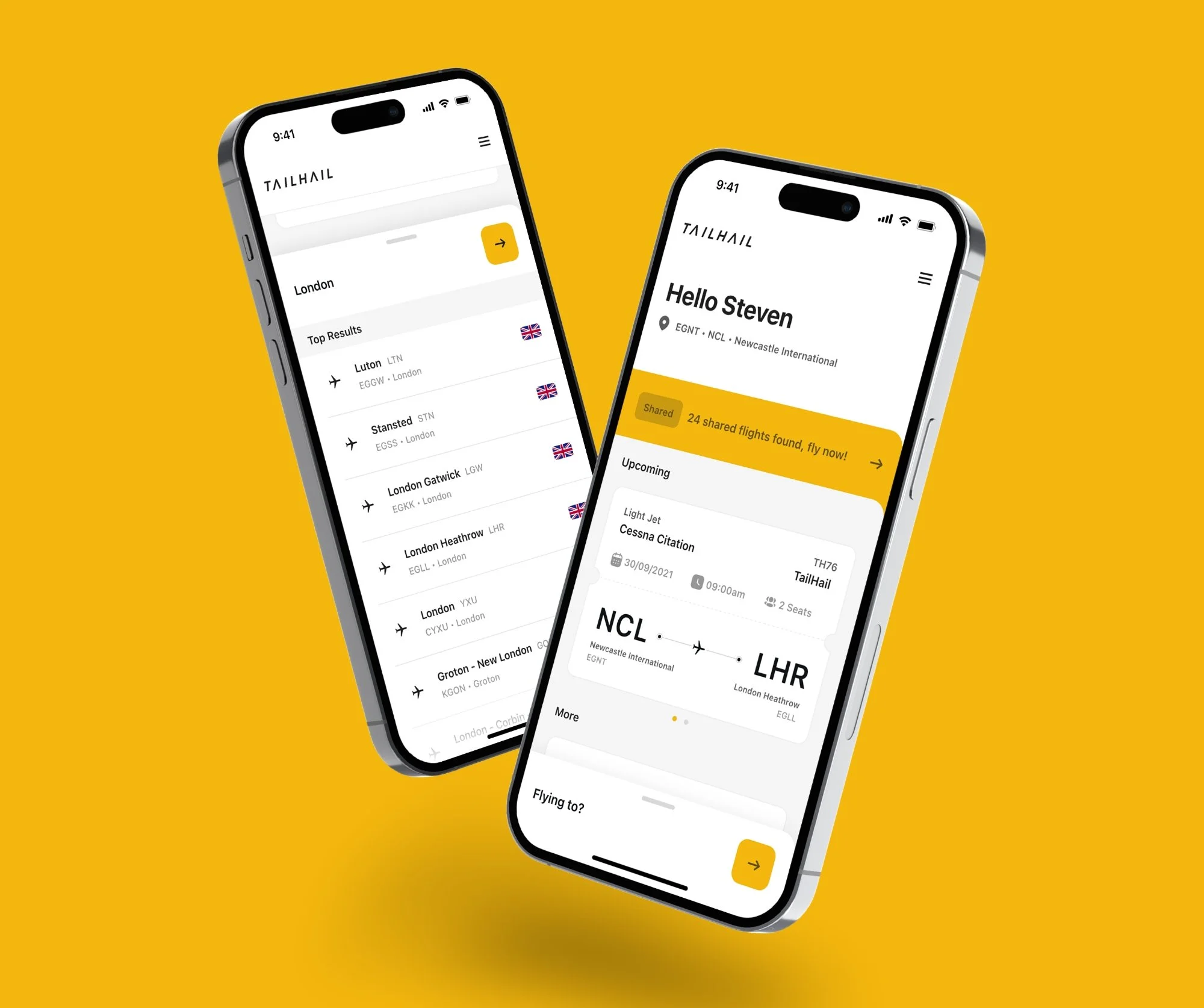
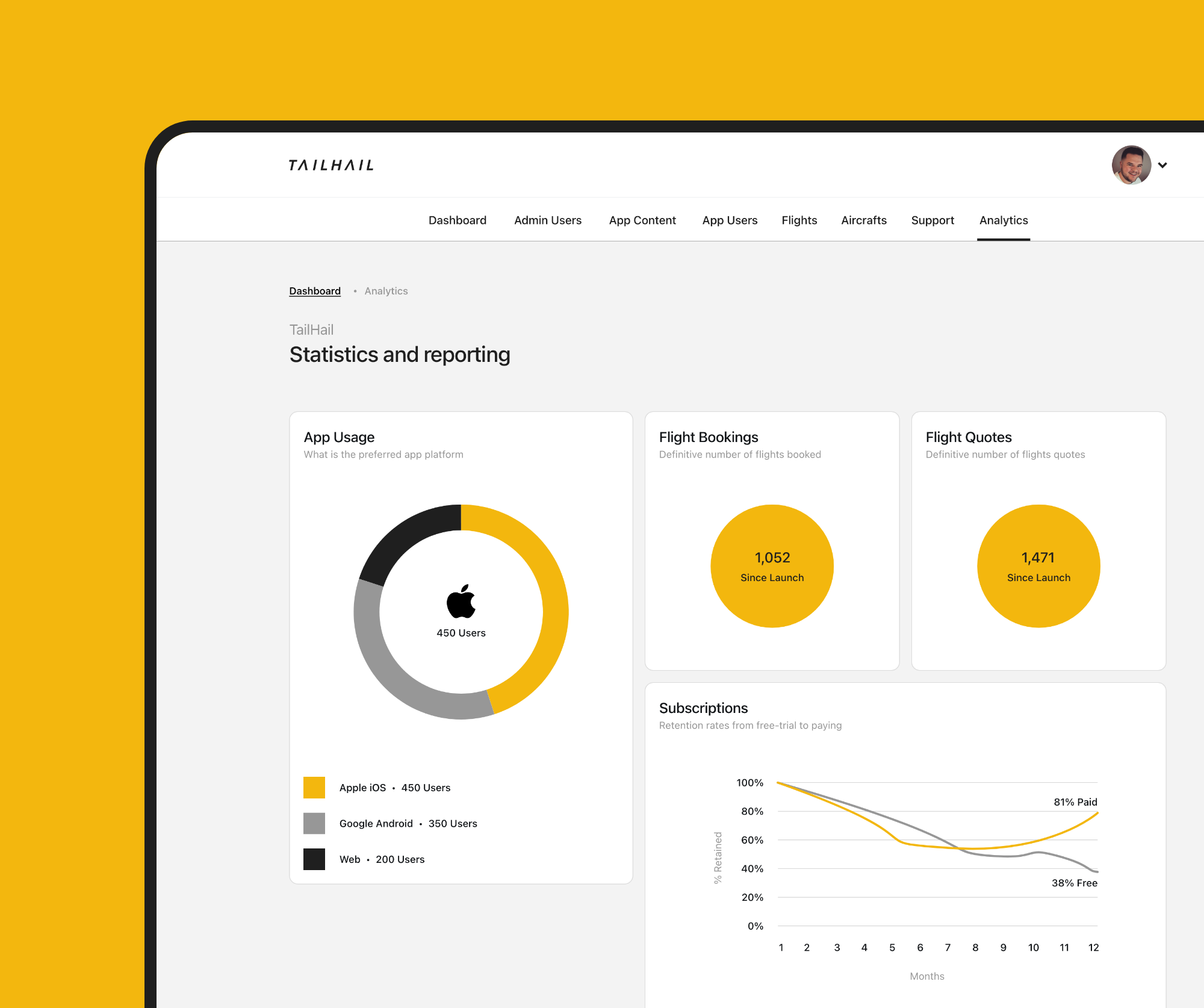
TailHail is a membership-based private aviation platform designed to make flight sharing and private travel more transparent, flexible, and accessible. I led product design from early concept through high-fidelity UI, working closely with product, engineering, and business stakeholders. The project spanned web and mobile experiences and focused on defining a scalable MVP for a global audience.

Overview
Role: Product Design Lead
Team: 1 Project Manager, 1 Product Owner, 1 Product Designer, 2 Engineers
Platform: Web, iOS and Android
The Problem
Private aviation platforms are traditionally opaque and fragmented. Pricing is unclear, booking flows are inconsistent, and most experiences are designed for industry insiders rather than everyday users. First-time customers often struggle to understand their options, while experienced travelers face friction navigating outdated interfaces. The challenge was to design an experience that felt modern, intuitive, and trustworthy while positioning TailHail as a lifestyle-driven alternative to traditional charter services.

A snippet of the Discovery Workshop outputs
We began with a structured discovery phase to align the team around business goals, user needs, and constraints. Through collaborative workshops, we defined core user segments, mapped end-to-end journeys, and identified pain points across search, booking, and account management. This process helped clarify the value proposition and establish a focused MVP scope, ensuring design decisions stayed grounded in both user needs and feasibility.
Insights from discovery directly shaped the experience strategy. User flows were designed to reduce cognitive load by breaking complex tasks into clear, sequential steps. Personas guided feature prioritization and content hierarchy, ensuring the interface supported both experienced private travelers and users new to the space. These decisions created a strong UX foundation before moving into detailed interface design.
Discovery & Research
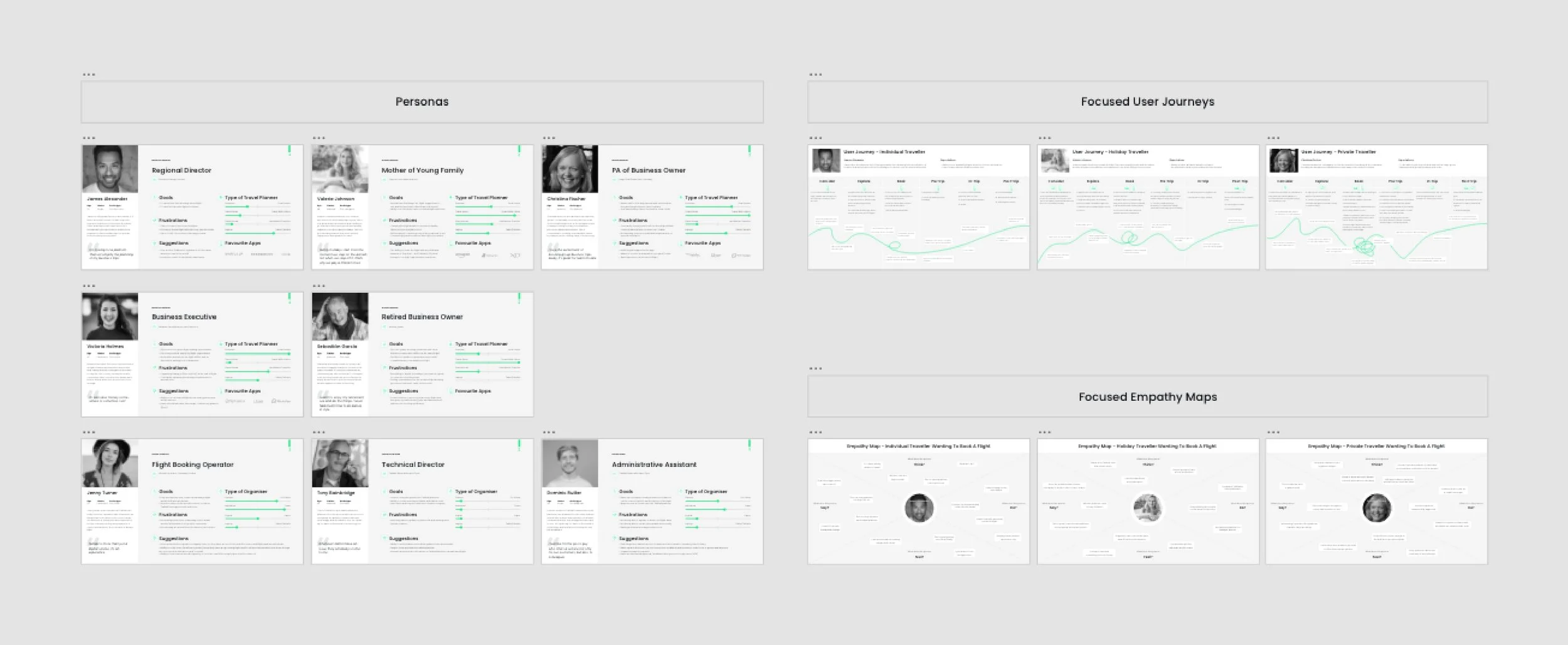
Defined User Personas, User Journey and Empathy Maps
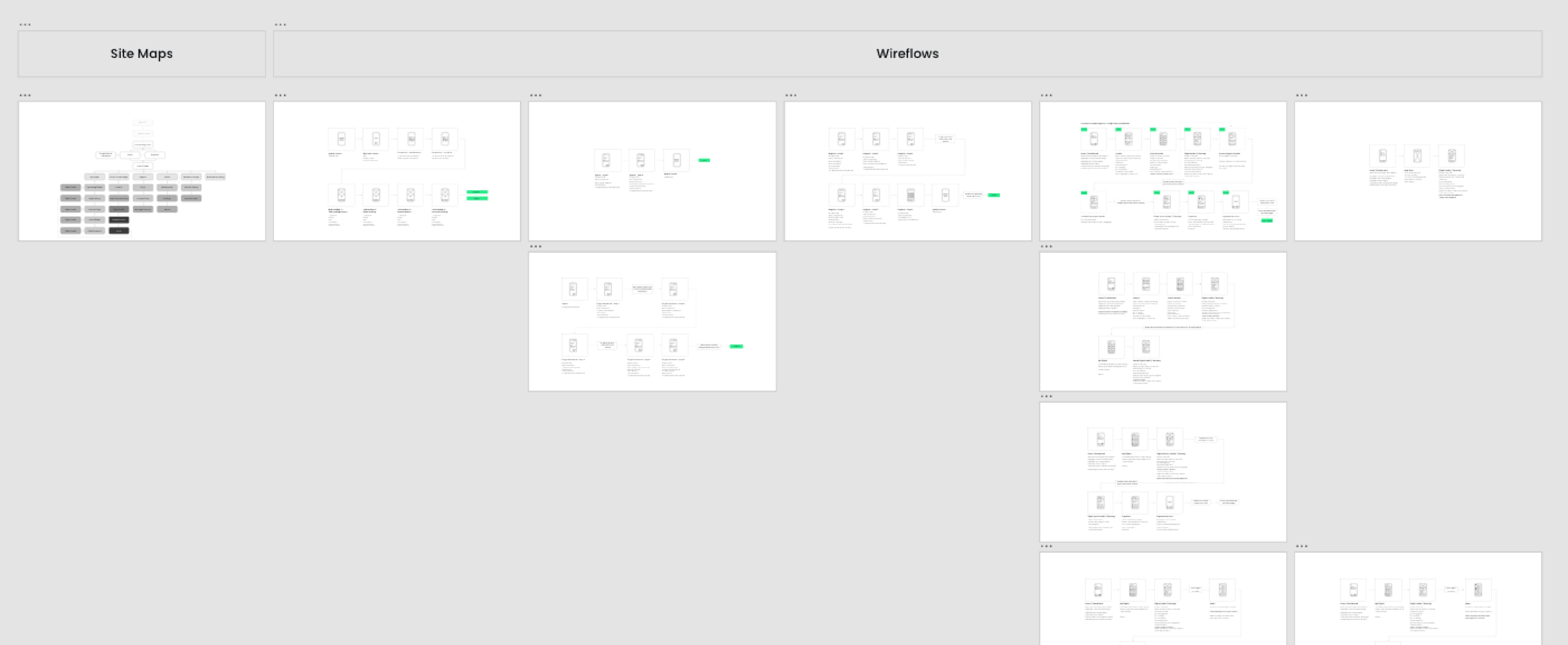
Defined platform Sitemap and very low level Wireflows
Design & Iteration
I led the design process from low-fidelity wireframes into high-fidelity UI, iterating closely with stakeholders. Early wireframes were used to validate layout, navigation, and core flows quickly, while high-fidelity designs explored visual direction, usability patterns, and edge cases. Key experiences included home and airport search, booking and itinerary management, quotes and payments, and membership selection.
Throughout the process, design decisions were driven by UX rationale rather than aesthetics alone. Interface elements were prioritized based on user intent, error states were considered early, and flows were refined to reinforce clarity and trust. Regular review cycles allowed the team to challenge assumptions and improve the experience, even without formal usability testing.

Example of the iterative feedback loop on TailHail’s home screen (low-fidelity Wireframes)

An overview of the TailHail iOS app (high-fidelity Wireframes)

Example screens - Home & Airport Search

Example screens - Flight Itinerary & Quote Payment
Outcomes & Impact

Example screens - Flight Search & Results

Example screens - Main Menu & Membership Selection
Although the project did not move into development due to budget and timeline constraints, the design phase delivered meaningful outcomes. The team produced a validated MVP concept, a cohesive UI design system, and a documented UX strategy that could be handed off to engineering. Early alignment and clear prioritisation reduced risk and provided a strong foundation for future development.
This project reinforced the value of investing in discovery, defining scope early, and maintaining tight collaboration across disciplines. The result is a design-ready product framework with a clear path toward prototyping, testing, and phased rollout. While TailHail never launched, the work demonstrates end-to-end product thinking and the ability to translate a complex domain into an intuitive user experience.
For a full breakdown of this project please see the design documentation with more intricate detail of process and decision making. Note - credit to Boxmodel for allowing this project to happen.